The Encampments: An Interview with Director Michael T. Workman
by Danielle Maisano
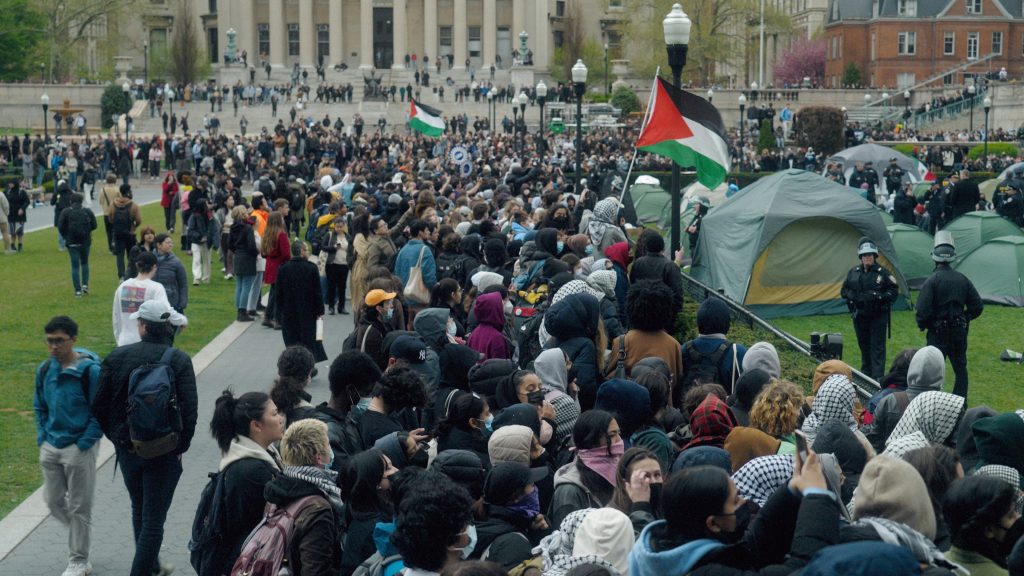
In April 2024, protests erupted on campuses across the U.S. and beyond, opposing the genocide in Gaza and the continued support for Israel by governments and institutions. In the U.S., the centre of the movement began at Columbia University, a school steeped in the legacy of student activism and a tradition of anti-war protests, which ironically, the university proudly claims. For weeks that spring, the world watched as students peacefully gathered and were met with brutal state repression. Media coverage portrayed the Columbia protesters as antisemitic extremists, diverting attention from their actual demands: an end to the war in Gaza and divestment from Israel.
The Encampments, directed by Michael T. Workman and Kei Pritsker, tells the story of student protesters in their own words, interwoven with footage of the genocide unfolding half a world away. This devastating imagery keeps the purpose of the protests unmistakably clear, highlighting the absurdity of silencing those who speak out against such senseless violence and loss of life. Two years have passed since the events captured in the film, yet the war continues, while the United States and other Western governments intensify their crackdowns on dissent. We spoke with director Michael Workman about how the film not only confronts the brutal realities of the present but also underscores the enduring power of peaceful, collective action in resisting them.
He ended up staying for the next 12 days filming. At first, he planned to make a YouTube explainer video, which is what he usually does at Breakthrough. But through conversations, he realised maybe it should be turned into a feature documentary. That’s when Kei reached out to me. I came on board right after the encampment was raided and came to New York, worked on interviews, producing, working with students, and editing.
We finished the film in about seven months, which is a really short turnaround time for a feature doc. But we wanted to strike while the iron was hot. Most of the time with documentaries, they want you to wait until something is basically over, and then you make a film about it that has all the right takes in hindsight, but you can’t really effect change in the moment. At the same time, people are always talking about effecting change in that way. But we wanted to release something while things were still ongoing, to be a force in changing the narrative around the encampments.
Michael Workman: I’m definitely inspired by those world cinema movements for liberation that attempted to challenge the status quo. One of the most important things is telling stories that are risky to tell, stories the powers that be don’t want you to tell, which is very hard under a capitalist framework in which all of the funding mechanisms are run by capitalist corporations and their foundations that ultimately also have investments in Zionism and imperialism.
So it’s hard to make films that truly challenge those institutions, because they are the ones that also fund all of the artwork that is being made in the U.S. and the West. For us, it was about telling stories that couldn’t be funded with the politics that they have and trying to find ways to get them out. Finding alternative methods of funding and releasing films to make sure they can have a high impact. We understand that we’re basically operating on enemy territory, more or less. We’re not at the point where we have to do secret screenings of these films because of a complete fascist takeover, but we’re moving in that direction.
The powers that be have really effective forms of censorship, and those forms of censorship are not ever deemed censorship. They’re just someone saying, “You didn’t get this grant, it just wasn’t quite good enough. It was a really competitive year.” The same thing goes for film festivals and distribution. That’s how censorship functions in capitalism. For us, it’s also an opportunity to talk about these things and to hopefully expose not just the lies about Palestine but the lies of imperialism in general.
Michael Workman: We always wanted the film to be contextualised. We wanted people to actually understand why the students did what they did, because we saw that the media was completely doing the opposite. They were trying to decontextualise the events and not allow the students to speak about the things that were inspiring them and moving them to take the actions that they did.
So part of doing that was to look at the history of the movements the students were drawing inspiration from: the anti-apartheid struggle in South Africa, the anti-war movement during Vietnam, and previous student movements at Columbia. These movements were all connected to greater struggles against imperialism. What’s happening in Palestine today mirrors what U.S. imperialism has done in Vietnam and elsewhere: using force to bend nations to its will for capitalist exploitation. That was something that was just inherently part of the story, if you actually look and try to find the truth.
The media refuses to make those connections because they are the main propagandists of imperialism. Doing that would expose their hand as not the balanced force that is always looking at all sides and trying to find the grey area. Really, they are the primary ideological force behind the justification of imperialism. We wanted the film to reveal those links clearly.
Michael Workman: We knew that we needed to get the film out fast enough that we wouldn’t have time to seek the normal funding avenues for documentary films, like applying for grants and foundations. We also knew that we didn’t want to censor our politics, and we knew that that process really requires changing your politics to fit the politics of the foundation. So we had to search for alternative funding options and be very thrifty, basically, to try to make the film as cheaply as we possibly could.
Our first bout with censorship really was at the film festival stage, when we were submitting to different festivals. We know of a lot of internal turmoil that happened over film selection between the people who were selecting the films and the leadership, who were worried about the politics of the film and that it wasn’t “balanced” enough, and worried about their funders and what they would think of the film. I don’t want to be more specific than that, but that was happening behind the scenes, absolutely.
There were also groups of online Zionists who, when they would see that the film was going to be screening at a theatre, would bombard the email inbox and the telephone lines of the theatres to intimidate them into not screening it, saying that it’s terrorist propaganda, that it’s antisemitic. I think most of the theatres still went along with the screenings, but some didn’t, and we lost some major opportunities that way.
Our opening weekend in New York City at the Angelika Film Center, somebody came into the lobby of the theatre screaming about the film, saying that it was antisemitic and then spray-painted a yellow ribbon in the lobby and left. There was a lot of Zionist intimidation, but that didn’t correlate to the experience in the theatre. Ultimately, when we were screening the film, it was an overwhelmingly positive experience, and these were rooms where people were inspired and moved.
There was also repression on campuses around screening the film, which we expected. Two students at UCLA were arrested trying to screen the film on the lawn on the anniversary of their encampment. There were about 60 riot police on the lawn who chased them around campus as they tried to set up a second screening. They confiscated all of their screening equipment, and there were even private security forces blocking off the lawn three hours before they were supposed to set up the screening, so that they couldn’t get on. So there’s been a lot of repression on that front. In some ways though, that level of repression is also a sign of success.
Michael Workman: I think the movement is obviously affected by the Trump administration’s repression. In some ways, because the repression is so overt and severe, it has also re-energised the movement at certain times. The abduction of Mahmoud Khalil and Rümeysa Öztürk and other students put a lot of people out in the streets again in a way that we hadn’t seen in the Palestine movement for a year, basically since the encampments. That movement was also triggered by repression from the state. The encampments would not have been what they were if Columbia hadn’t made the historic mistake of calling the NYPD on their own students and creating that spectacle of repression, which inspired students around the world to take up encampments. I think we can see that these moments of repression breed resistance, that they can have a chilling effect, but they also, at the same time, re-energise people, because it sets the stakes higher and people feel the need to do something. It’s becoming harder and harder to do the mental gymnastics needed to support Israel as a genocidal state.
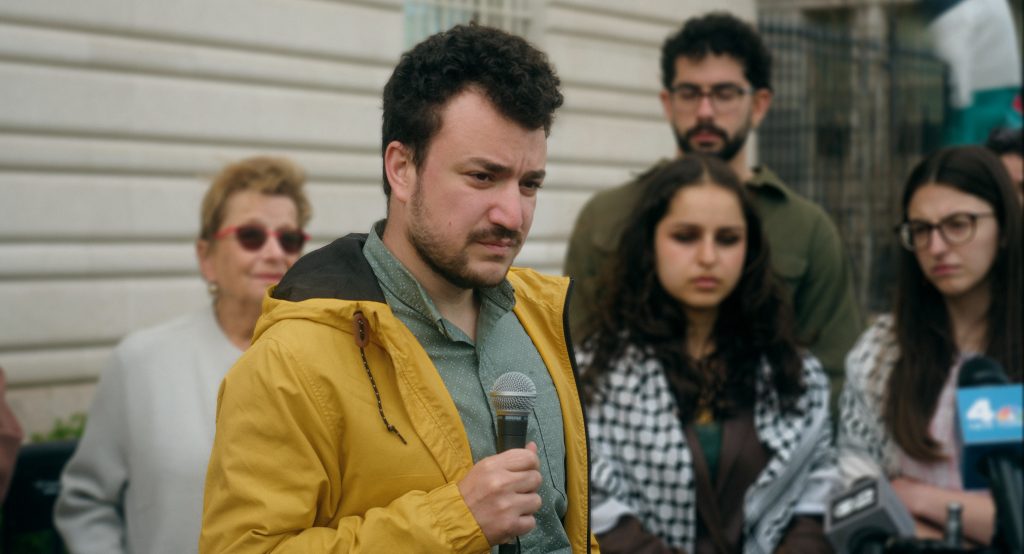
Michael Workman: The biggest surprise was the overwhelming support for the film. We were expecting more hostility than we received. We were really preparing for the worst, but it was surprising that even in the U.S., most of our press was pretty positive. Our press in the UK was a little more hostile, which is interesting. There are definitely some ideological differences between the press in the U.S. and the UK.
It’s been really moving to hear students reflect on their experience after watching the film, and feeling moved and re-energised. That was one of our primary goals, and for the most part, that’s been the students’ experience of the film. I think it shows that we need stories told by people in the movement who deeply understand it and can communicate the experience of being a part of these movements in a way that people outside of the movement can understand, while also reinvigorating the people who are in the movement and may be tired or feeling down because of how awful things feel or how insurmountable the odds seem.
When they see stories reflected in this way, they can see that they have power and that the repression they’re facing is actually a sign that they’re building power. If there weren’t this repression, it would mean they were irrelevant and not threatening to power. It’s really a sign to move forward and not retreat, and that’s been very inspiring to hear from students.


